High-mix, low-volume CNC shops often assume robotic machine tending only works when one part runs for weeks. That assumption confuses volume with repeatability. A shop can automate shorter runs when enough operations share a stable loading method, when changeovers are designed rather than improvised, and when the robot recipe can be recalled without rewriting code. The goal is not to force every job through one universal cell. It is to identify an economically useful family of work, minimize the internal changeover that stops the machine, and keep manual exceptions from making the standard process too complex. This guide explains how to do that without sacrificing the flexibility that wins job-shop business.
01High mix changes the automation problem
In a high-volume cell, long production runs can absorb substantial setup effort. In a high-mix shop, frequent changeovers make setup time, engineering time and recovery skill part of the core economics. The robot may be technically able to grip dozens of parts, but the application fails commercially if every new job requires custom programming, new fingers and hours of integration support.
The correct target is a flexible production method, not a universal robot. Define the range that the first cell will cover and the exceptions it will not. A smaller, coherent family can deliver faster changeovers and higher reliability than a broad scope filled with compromises. Once the standard is stable, add families based on evidence.
Automation also changes the role of skilled employees. Machinists still own setups, first-piece approval, process control and problem solving. The cell removes repeated part exchange and allows one person to support more productive work. The complete machine tending guide explains the general operating loop.
02Create part families from handling requirements
Traditional part families may be based on material, customer or machining process. Automation families need an additional view: how the robot sees, grips, presents and loads the part. Group parts by raw shape, size range, weight, gripping surface, orientation, fixture method and required secondary operations. Parts that look different on a drawing may automate well together if they share those handling characteristics.
Build a part-family matrix. Rows are jobs. Columns include raw geometry, finished geometry, weight, gripper type, finger set, pallet or tray, fixture, CNC program, robot recipe, quality check and monthly frequency. The matrix exposes common equipment and the true exceptions.
Score candidates on repeatability and recurrence, not only annual volume. A 40-piece job that returns every week may be a better automation candidate than a 500-piece job that runs once. Combine recurring jobs into an annual load profile so the cell is justified by the family, not one work order.
- Stable raw-part location and orientation
- A reliable gripping surface before and after machining
- Compatible weight and size for one robot and gripper range
- Repeatable fixture or chuck loading
- Enough recurring demand to reuse the setup and recipe
03Reduce changeover before automating it
A robot does not fix a disorganized setup. Apply setup reduction first. Observe the change from the last good part of one job to the first good part of the next. Separate internal work, which requires a stopped machine, from external work that can be prepared while production continues. The Lean Enterprise Institute definition of SMED emphasizes separating internal setup from external setup and converting internal operations where possible.
For a tending cell, external work can include preparing the next tray, staging fingers, verifying the CNC program, loading the robot recipe, gathering gauges and confirming material. Internal work includes changing chuck jaws or fixtures, installing fingers that cannot be staged, teaching an unavoidable position and proving the first piece.
Measure changeover from last good part to first good part, not until someone says the setup is done. A fast mechanical swap followed by 45 minutes of searching for a program is not a fast changeover. Standard work should specify the sequence, tools, settings, verification and responsible role.
04Design flexible grippers, fingers and workholding
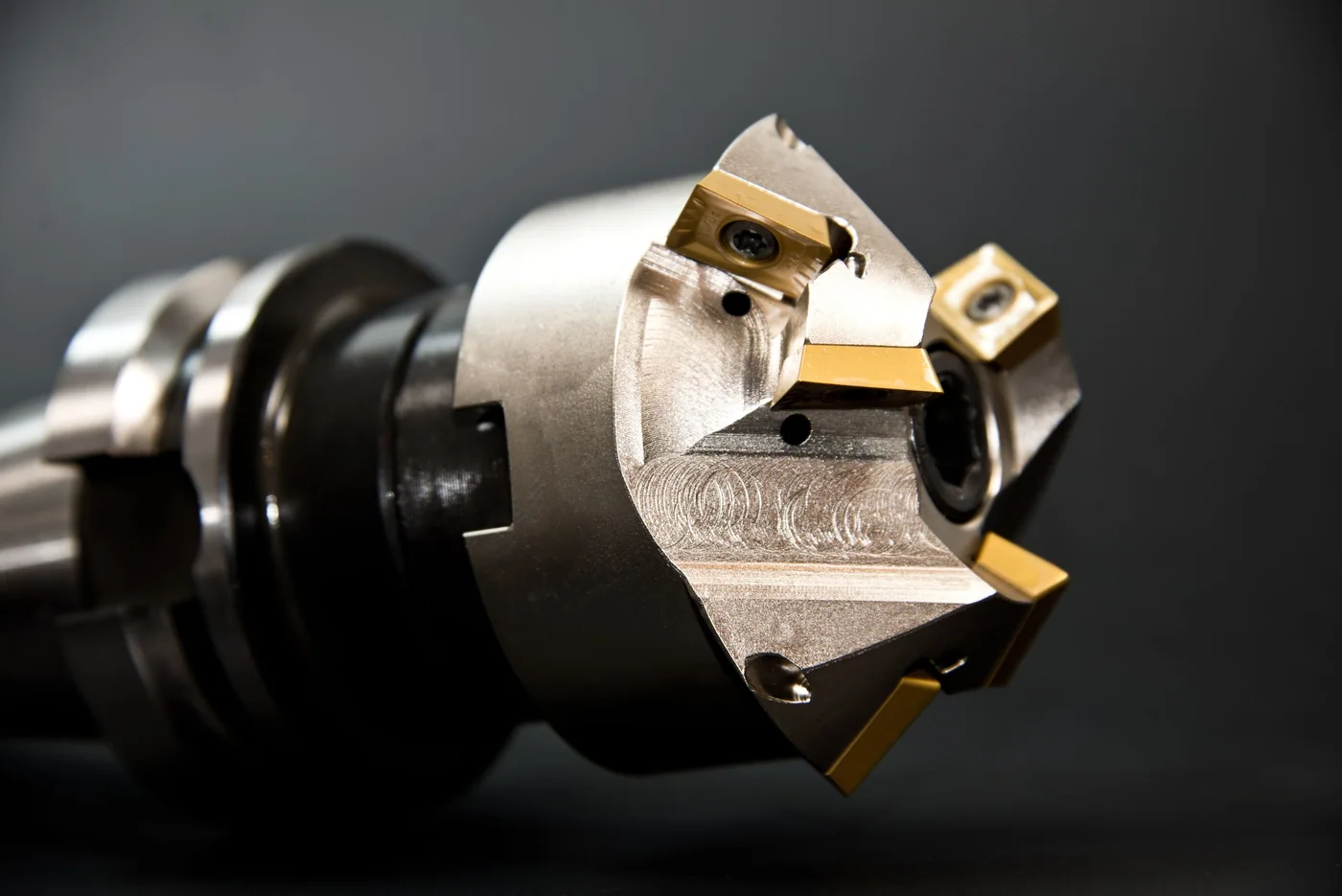
Flexibility does not mean one gripper must hold every possible part. It means the tooling strategy covers a defined family with fast, repeatable changes. Options include adjustable fingers, dedicated quick-change finger sets, two grippers on one wrist, automatic tool changing or a common raw-stock gripping standard.
Dedicated fingers can be inexpensive and reliable when they are labeled, stored and changed quickly. Adjustable fingers reduce inventory but add adjustment and verification. Automatic tool change can reduce intervention, but it adds hardware, controls and stored tools. Choose the method from changeover frequency, unattended target and part risk.
Workholding needs the same strategy. Standardized jaw interfaces, zero-point fixtures, common datums and confirmed clamp states reduce variation. Design the handoff between robot and fixture so that small raw-stock differences do not create seating errors. Include cleaning and chip control because a flexible cell can become unreliable if each new part traps chips differently.
05Use recipes instead of robot reprogramming
Each approved part should have a controlled recipe containing robot positions, grip settings, pallet pattern, part count, CNC program reference, fixture selection, quality checks and recovery notes. Operators should select or scan the job, verify the physical setup and recall the recipe. Editing robot code should not be a routine changeover task.
Recipe control needs revision discipline. Link each recipe to the correct drawing or job revision, restrict who can edit critical settings and keep backups. When a part returns months later, the shop should be able to restore the known setup rather than recreate it from memory.
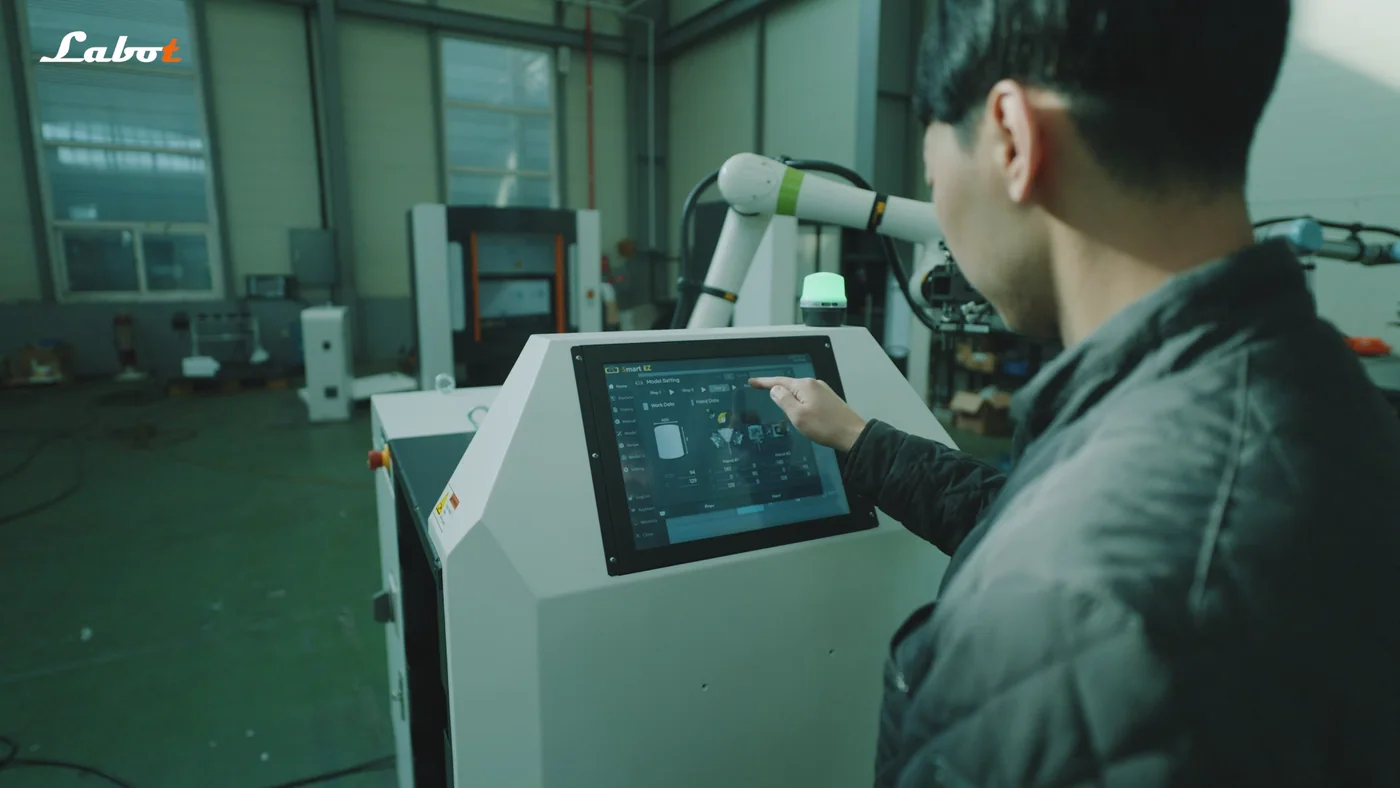
YC Robotech Smart EZ software supports a guided six-step workflow for compatible Labot systems: select the model, select the pallet/tray type, set the recipe, configure the model, set the workpiece position and apply it to the CNC. That approach is especially relevant in a high-mix environment because reuse depends on recallable setup rather than robot-programming expertise.
06Choose part presentation for fast job changes
Part presentation must balance capacity with changeover work. A fixed tray is simple and repeatable, but a unique tray for every part can create storage and engineering overhead. Modular trays, adjustable grids, drawer pallets and exchange carts can cover families while allowing the next job to be prepared offline.
Offline preparation needs an explicit standard. The next tray should arrive with the correct raw material, part orientation, quantity, recipe identifier and inspection plan confirmed before the active job ends. Use physical keys, labeled locations or barcode checks where a similar-looking part could be loaded into the wrong recipe. A presentation device is not truly flexible if operators must measure every pocket, search for hardware or manually correct orientation at each changeover.
Build a changeover kit for each approved family. It can contain the finger set, fixture components, tray inserts, gauges, setup sheet and a photo of the verified condition. Record the kit location in the recipe and audit it after use. This simple discipline protects availability because missing change parts are found while the machine is still producing, not after the last good part. It also makes the process easier to train, repeat and improve across shifts.
The Labot SD uses a drawer-based architecture with four honeycomb trays and Smart EZ control. Its published workpiece range is 24 to 100 mm in diameter and 10 to 120 mm in length, subject to application review. The platform supports specified collaborative robot options and is designed for compact workflows. Those characteristics can fit high-mix work when the target family falls within the handling and capacity limits.
For larger or more varied parts, the Labot MT handles workpieces up to 200 mm in diameter and 400 mm long, with 20 kg or 35 kg payload options. Its split turntable supports continuous tending, and the next job's parts can be prepared while the current one runs.
Do not buy capacity from a catalog number alone. Calculate pieces per job, machining time, desired unattended period and time to exchange or refill the presentation device. A smaller pallet that changes in minutes may create more weekly output than a large custom rack that is difficult to reconfigure.
07Schedule batches around the real constraint
High-mix automation does not eliminate batching. It changes the economic batch size. Group jobs to reduce fixture, jaw, material or inspection changes while preserving due-date performance. If two part numbers share the same fingers and fixture, running them consecutively may avoid internal setup. If a family uses the same raw diameter but different CNC programs, one replenishment plan may cover several jobs.
Use actual changeover and run data to set the sequence. A short cycle with a long changeover may need a larger batch. A long machining cycle can justify a smaller batch because the robot frees significant attendance during each piece. Overnight runs should be selected based on tool life, chip control, gauging and fault history, not only part count.
NIST describes a real manufacturer using automation and lights-out machining across high-mix, low-volume through high-volume production to improve throughput and spindle utilization. The NIST MEP case study is useful evidence that high mix and automation are not mutually exclusive, but the implementation still depends on process optimization and training.
08Prove the family and expand in stages
Launch with representative parts, not only the easiest part. Include a small, medium and difficult member of the chosen family. Validate pickup, gripping, fixture seating, chip behavior, first-piece checks, recipe recall and changeover time. Record interventions across enough cycles to find recurring failure modes.
Use stage gates. Stage 1 proves one part. Stage 2 proves repeatable changeover between two or three parts. Stage 3 proves the planned family and unattended window. Stage 4 considers the next family or machine. Each stage should have measurable acceptance criteria.
A high-mix shop should protect optionality. Preserve manual access to the CNC, use modular tooling where it creates value, keep recipes portable and document every approved setup. The objective is not maximum automation on day one. It is a stable system that earns the right to cover more work.
- Start with a bounded part family and written exclusions.
- Measure last-good-part to first-good-part changeover.
- Prepare trays, tools and recipes externally where possible.
- Use labeled, repeatable gripper and fixture change parts.
- Validate recipe recall and fault recovery with production operators.
- Expand only after the baseline family is capable and stable.